Paper

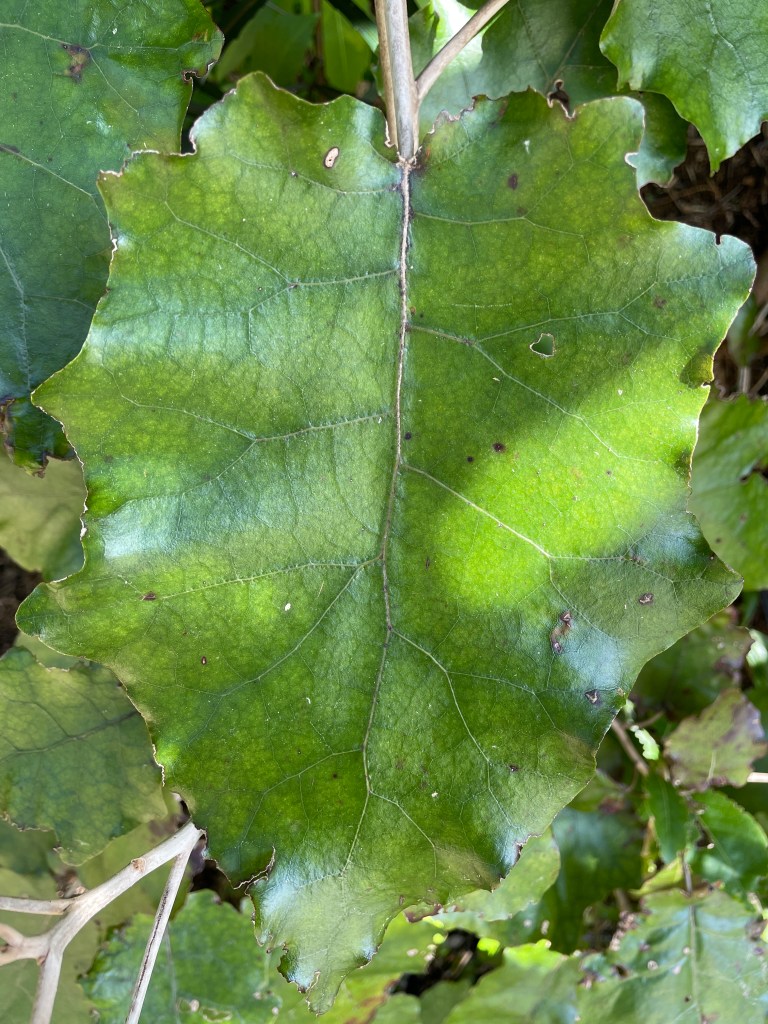
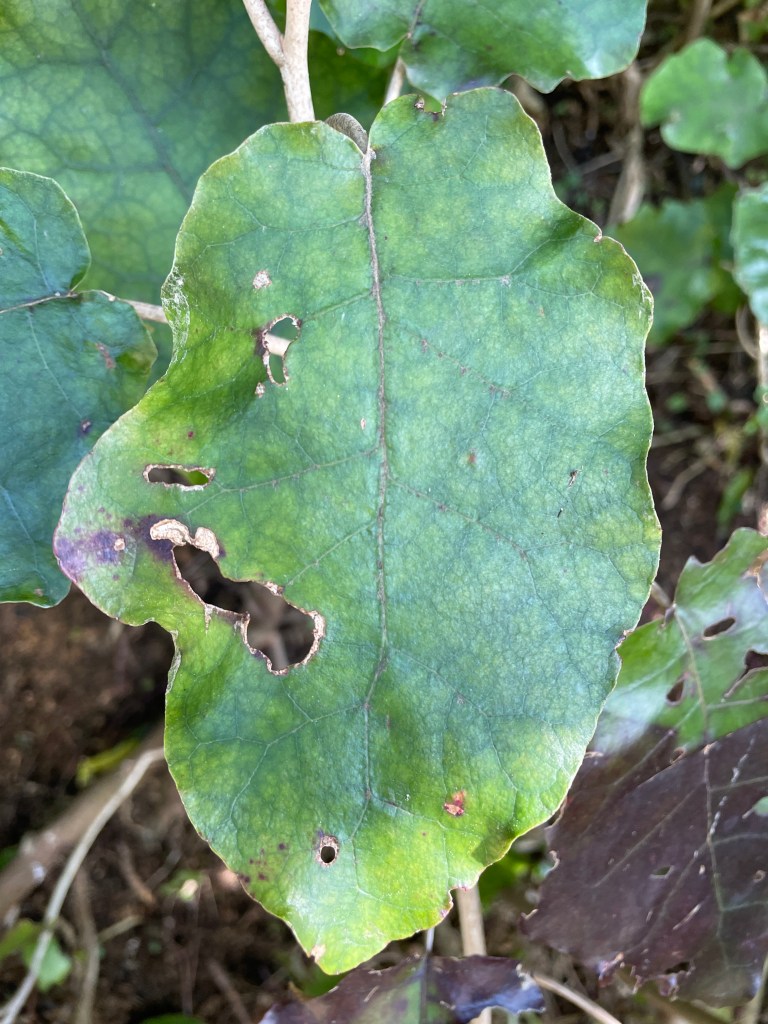
There’s a small tree with big marbled leaves on our jungly bank, which I’ve learnt is the NZ native rangiora (Brachyglottis repanda).

The big papery leaves have a furry white underside, which is apparently pretty reasonable for writing a letter on, or a luxurious option for wiping your backside (they are nicknamed “bushman’s toilet paper”). They’re not so helpful at the start of the digestive journey, being fairly toxic if you happen to eat one. Honey made with rangiora nectar is also poisonous, so I’ll keep redirecting bees towards my pair of mānuka.

We have about half a dozen rangiora scattered on the bank, some up to 2m tall. The lower ones are now trimmed to keep them out of dog’s reach, so he can focus his efforts on digging up ferns and jumping on top of my new kōwhai.
Sawtooth

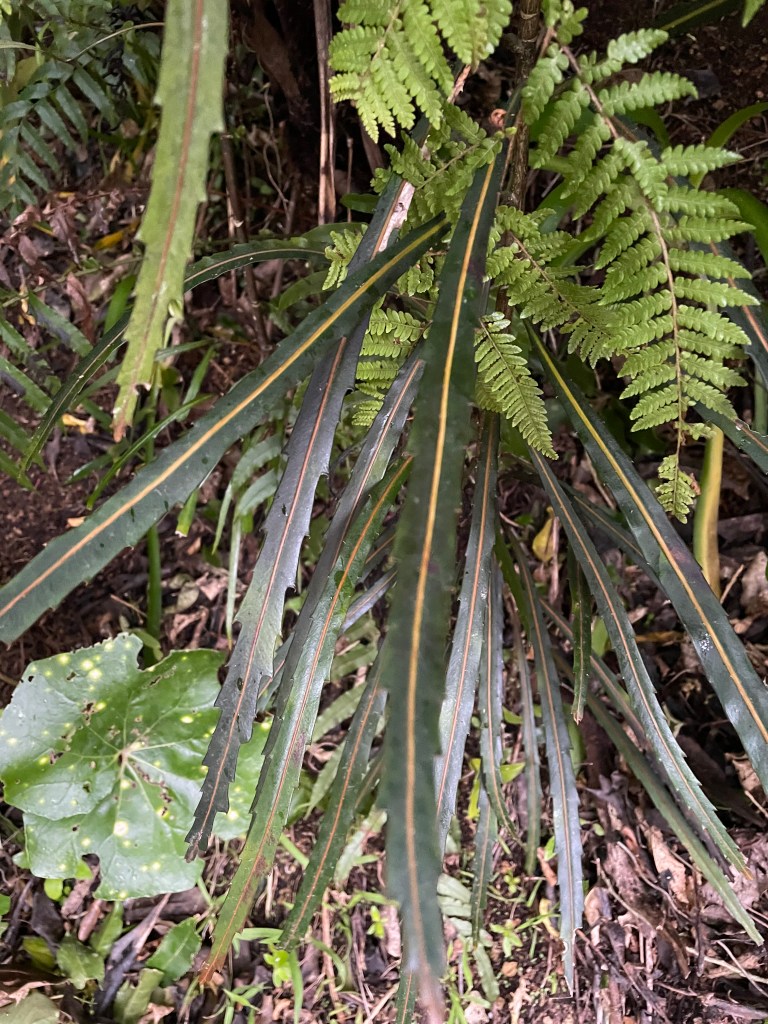
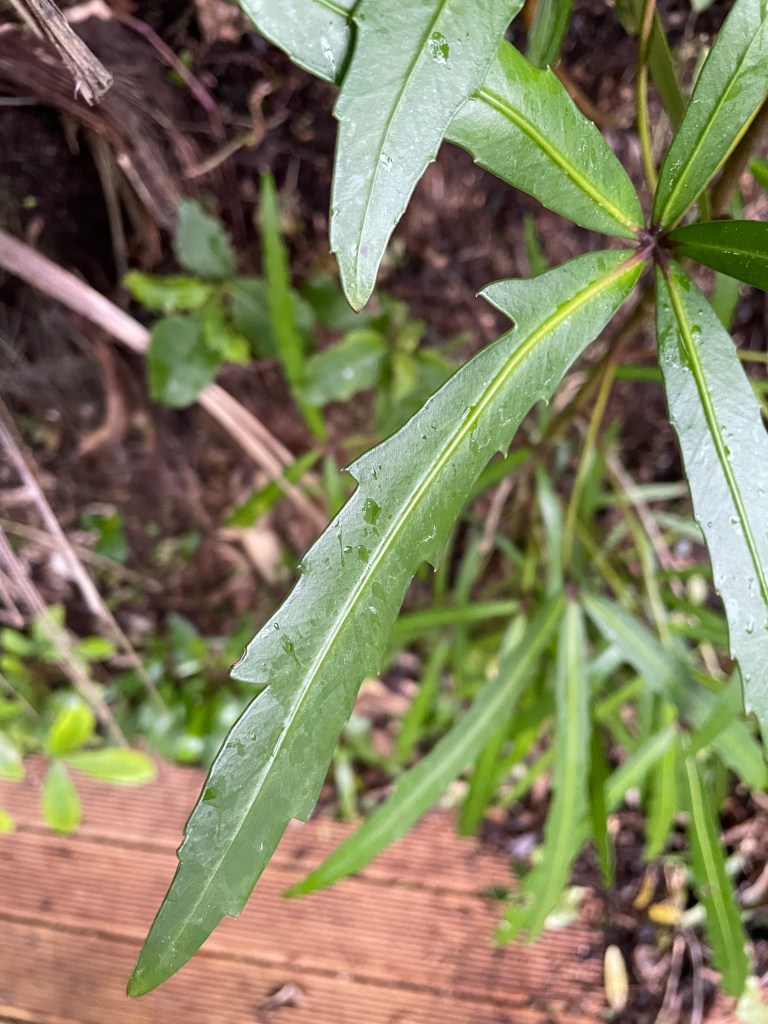
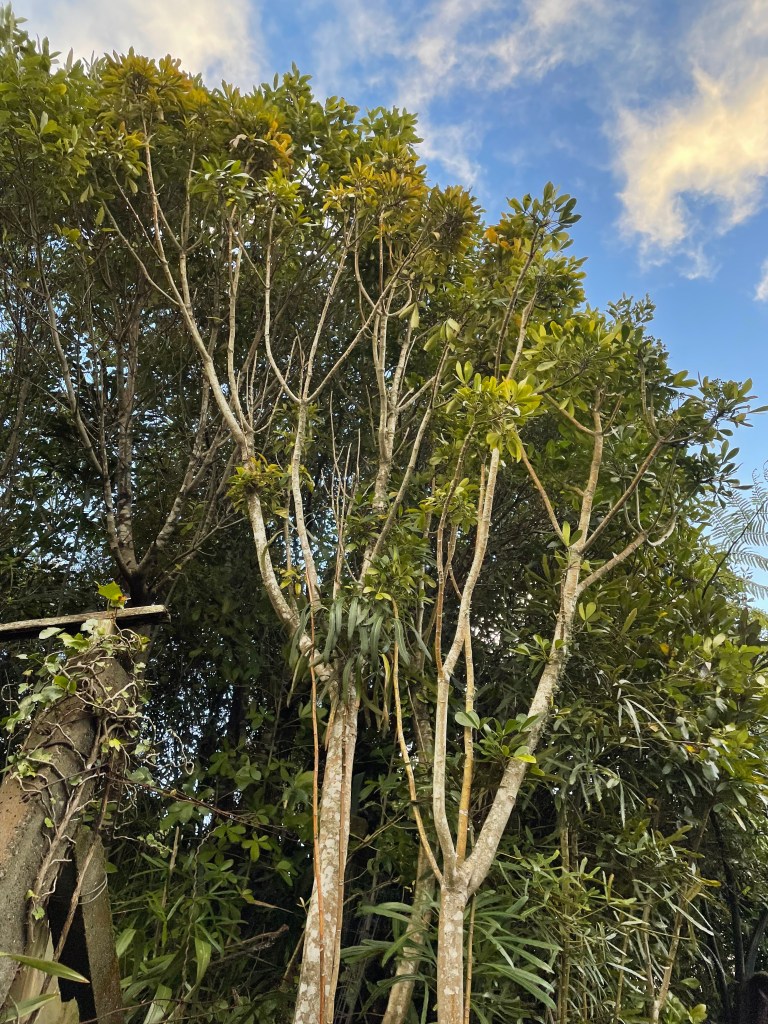
I’m enjoying roaming around the garden and pointing the PlantNet app at things. One small shrub I liked had slim jagged leaves with a median stripe. I was also curious about the tall bushy-topped trees that tower over the left-hand side of the house. Today I found out that these two were actually the same species: lancewood/horoeka (pseudopanax crassifolius). They look so different! I learnt that having wild contrasts like this between juvenile and adult plants is called “heteroblasty“.

One theory goes that the long-extinct moa wasn’t fond of grazing on the spiky leaves, but once the tree was beyond moa height, it no longer had to defend itself. The mature trunk is branch-less and the leaves high up in the canopy are broad and without teeth.

We have a few similar but wider-leaved plants on our jungly bank that look like they could be a coastal five-finger/houpara (pseudopanax lessonii) instead, or a hybrid of the two. At least some of the lancewood seem to have self-seeded because they appear in a few peculiar spots: hiding under the big camellias, and lurking by the letterbox.